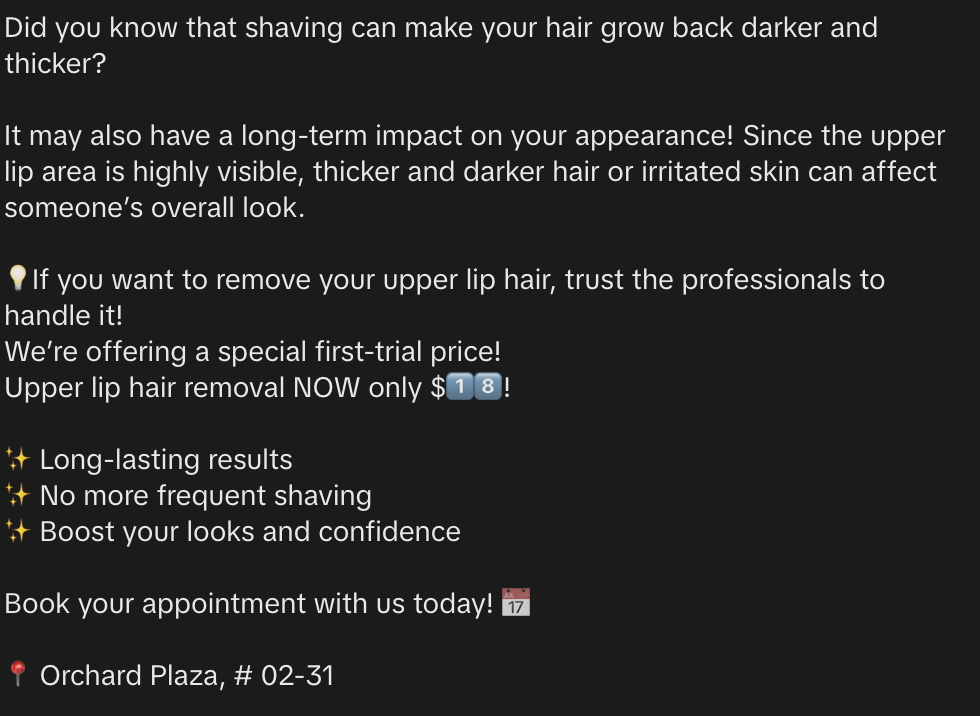
While scrolling on Tiktok, I came across a video/image that claims shaving your hair can cause it to grow back coarser and darker than before. I was immediately drawn to the daunting headline that appeared as a huge warning, emphasizing the reality of dire consequences if one shaved their hair. This is a claim I have seen countless times before, but I’ve remained skeptical of whether or not actual evidence existed to prove this claim true, or if it continued to circulate around without evidence in a careless and misleading manner.
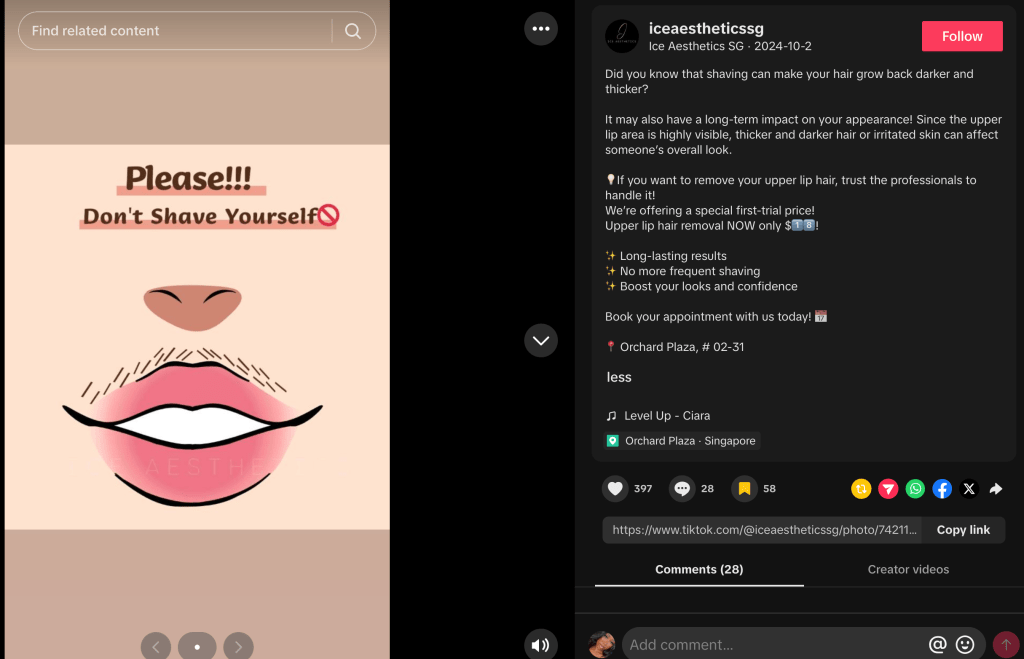
There were a few red flags that stood out from this post. The presence of dialogue that stirs up fear or concern among the audience was an alarming element. When looking at the caption of the post, underneath the claim sits a promotional offer that convinces the audience that booking with this brand will either improve the effects associated with shaving or completely prevent them. This act of persuasion makes the post appear to be led with an intent to advertise or market something instead of informing.

I decided to investigate with a simple search. I typed into my Google search engine “Shaving your hair makes it grow back thicker and darker than before”. I wanted to see what variety of articles and sources existed on this specific topic.
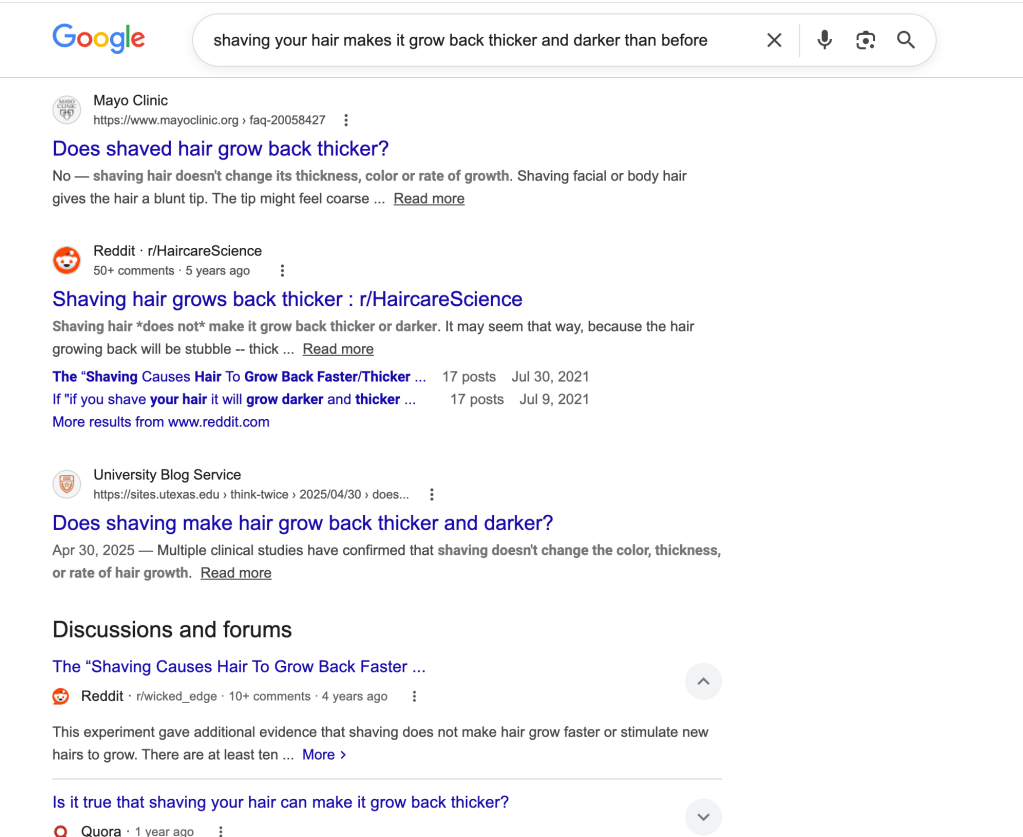
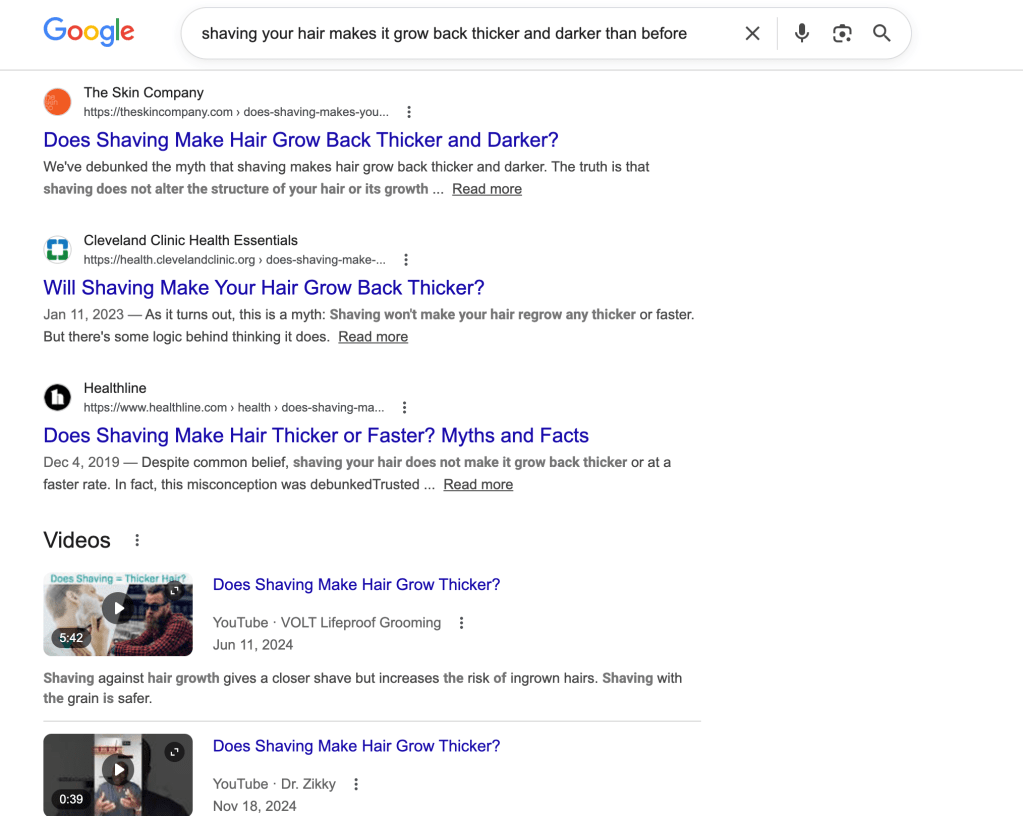
I saw sources such as blogs, health organizations, reddit chains, and even independent businesses throughout this search. At first glance, many of the articles had an immediate denial or shutdown of the claim. Regardless of seeing this, it was still my responsibility to throughly investigate whether or not actual evidence supported this claim.

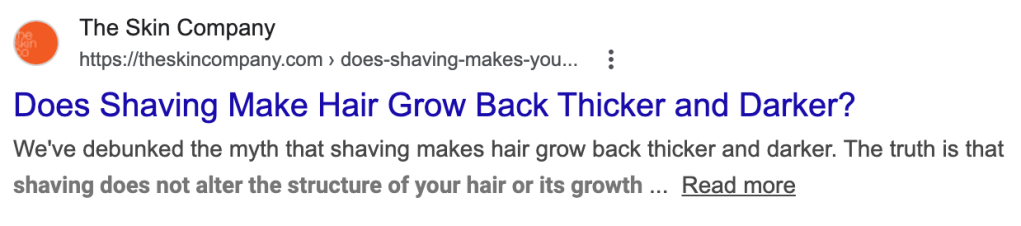
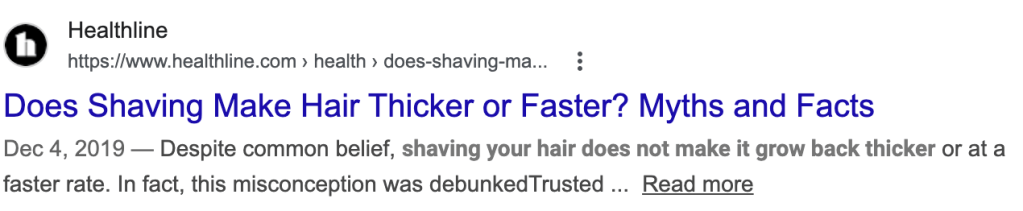

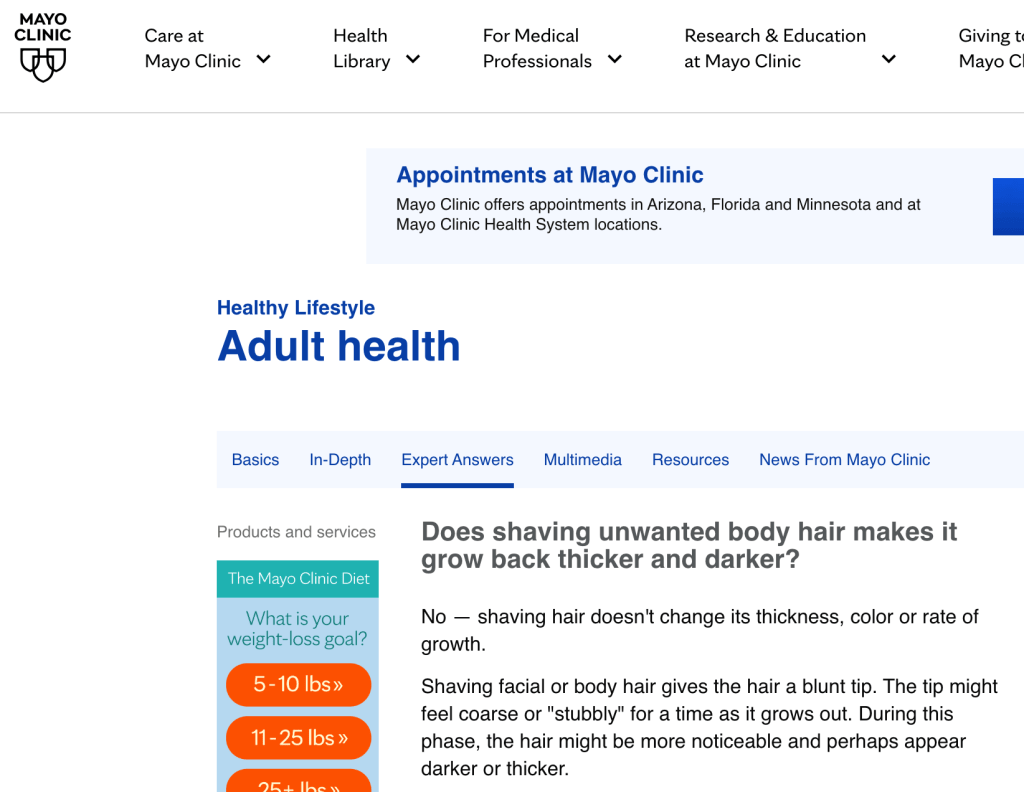
A part of the “SIFT Method” requires “Finding Better Coverage”, so I started seeking out trustworthy sources that could help give an actual reason behind the claim being accurate or not. I decided to click on some articles that contained a dermatologist’s expertise/perspective on the matter, and I also explored a short article from the Mayo Clinic. Mayo Clinic specifically is a well known reputable source for information in the healthcare/medical realm, which made it easier to gravitate towards for evidence. Seeing as dermatologists deal with and treat conditions relating to hair, skin, and nails, it naturally made sense to explore those articles as well.
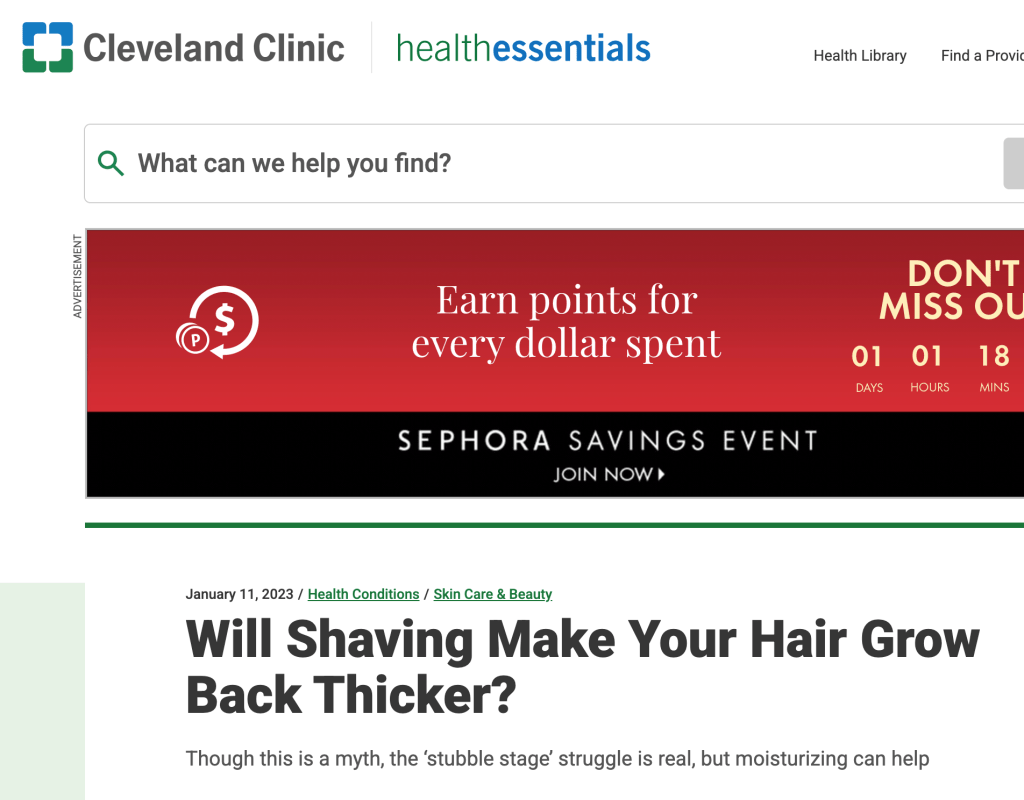
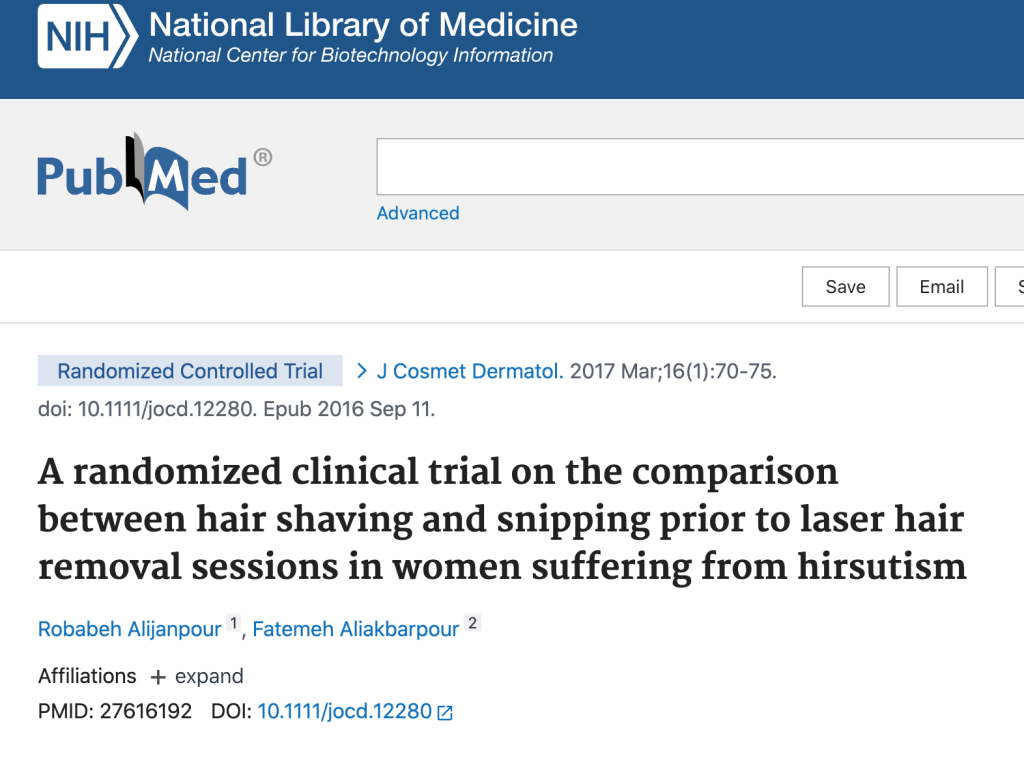
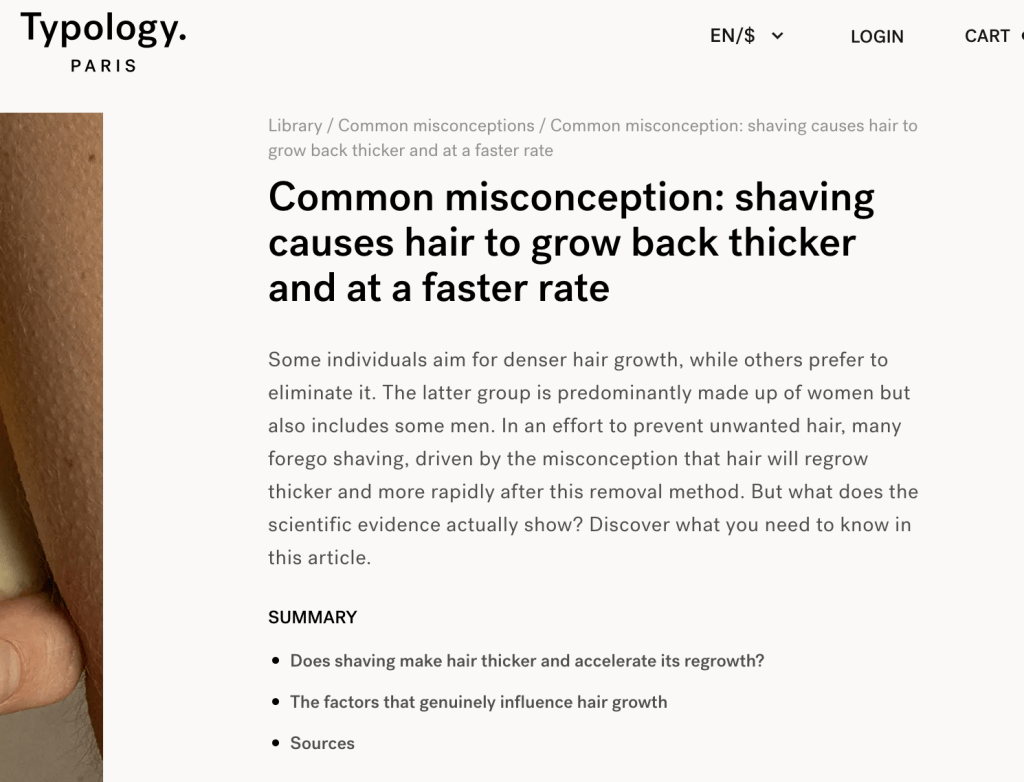
One article from Typology talked about a study published in the Journal of Cosmetic Dermatology that was conducted to see if there was a bigger difference in “thickness, color, and growth rate” of the hair follicle when hair was shaved or cut with a pair of scissors. This article highlighted that the study did not find any drastic differences between the two methods, making the original claim appear to be false. Not only did the Mayo Clinic article support this, but another reputable medical source known as the Cleveland Clinic did as well. It featured a dermatology resident by the name of Taylor Bullock, MD who talked in depth about why the claim is false, as well as reasons why the claim may feel true.
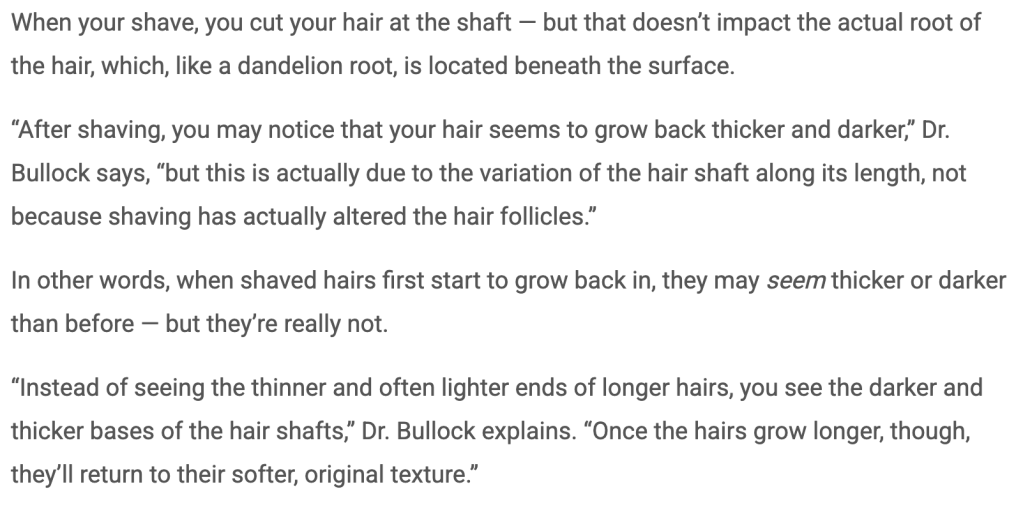
Bullock’s explanation makes it clear that hairs may “seem” different, even though the actual process of shaving negates that. This is an excellent example of recognizing the difference between personal perception and actual scientific facts. One person’s individual experience can ultimately be considered as factual evidence when in reality it is not. This is one of many ways in which misinformation forms and spreads throughout society.
All of the articles I read had a consistent conclusion when determining whether or not shaving changes the texture, color, and thickness of hair on the body. This leads me to conclude that the original claim is not based off of substantial evidence, and is therefore false.
When going back to the original claim, it is clear that the motivation behind it may be to deceive and gain something. The presence of “Trust the professionals” and “Book an appointment today” make the intent of the post seem to be promotional driven. This post essentially tries to convince its audience that if they do not book with the brand, they will continue to endure the “hair complications” that come from shaving. People’s personal experiences and perceptions about their hair growing back coarser or darker after shaving, alongside this advertisement, can further push an audience to believe and act on what they are seeing. This post spreads misinformation just to lure in new clients rather than providing factual information which is extremely manipulative. It is more than possible to promote your brand without encouraging fear or concern over something which essentially deceives and influences people’s habits or decision-making.

Analyzing this claim ultimately lead to evidence that shows shaving has no significant impact on the hair follicle or the change associated with it. This post highlights how certain misleading claims appear effortlessly credible by playing on emotions or beliefs tied to personal experiences, and/or utilizing marketing tactics. The time it took to investigate the claim before I immersed myself in a cycle of spreading misinformation was well worth it. I would not want to send any content like this to a loved one or anyone for that matter, without feeling confident that I’ve done the necessary work to make sure it contains accurate information. Reading through reputable and qualified sources to find patterns or differing themes helps slow the process of spreading misinformation, and ultimately allows us as a society to become more informed citizens and more responsible and considerate human beings.
 3rianna’s Way
Leave a comment