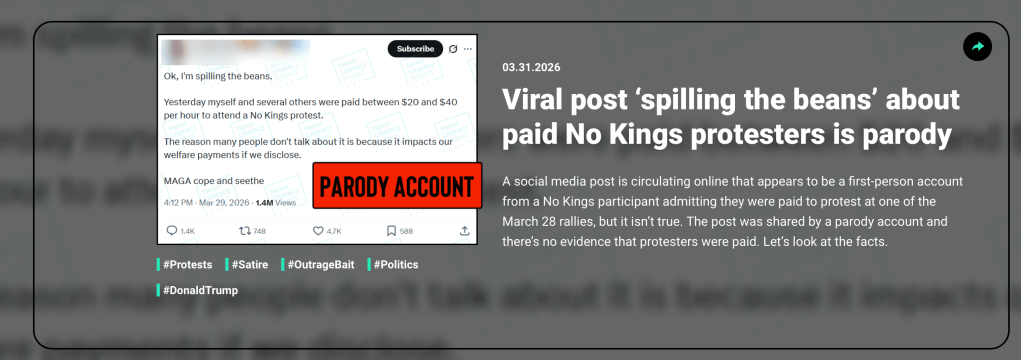
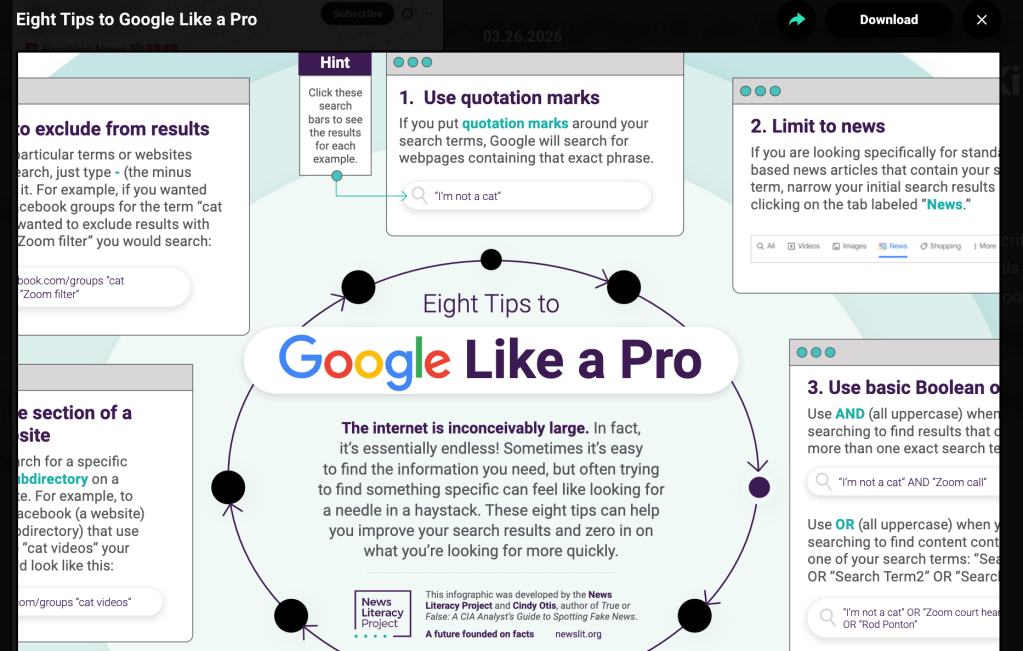
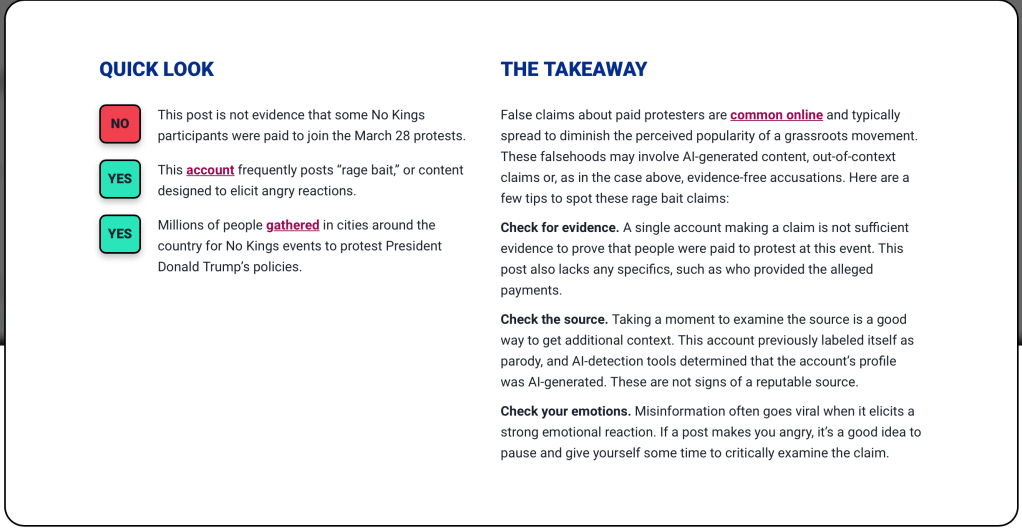
While interacting with “Rumor Guard” I learned that it is a wonderful tool that breaks down viral claims to show you why they are either factual or inaccurate. This tool utilizes real-time examples of misinformation, and emphasizes the importance of finding sufficient evidence to back up the claim(s), checking to see whether or not the claim is attached to a reputable site, and making sure to remove one’s personal emotions from the information in order to avoid clouded judgment. In order to use it, I simply clicked on one of the various claims that were listed, and then pressed “Learn More”. An in-depth explanation of what to look for to detect misinformation, and in some cases, how to check to see where information taken out of context originally came from was provided on the following page. This tool really teaches you to pay critical attention to the information that is presented to you. Oftentimes misinformation thrives because of a lack of researching and actually trying to confirm that various claims are indeed true. Making assumptions based off of emotional appeal or simply operating carelessly by believing any and everything you are exposed to are two of the many reasons misinformation continues to grow in society. This tool teaches you that there is a grave responsibility amongst us all to analyze, evaluate, and verify information before we accept it ourselves or share it with others.
I actually played both “Fake it to Make it” and “Bad News”, but I chose to focus on the latter. “Bad News” is an online game that immerses you into a world of creating misinformation and disinformation. Essentially, I was the creator of either a news site or a blog that only posted misinformation as its content. The more striking the false information was, the farther it would spread, and I would gain a significant amount of followers in return. There were six different techniques highlighted throughout the game that could be utilized to keep people misinformed and keep them held up in a delusion. There were choices associated with each new scenario, but if the story, headline, or claim was not grand enough, it would cause your followers to get upset or possibly consider separating themselves from your site/blog. This game teaches you about the various strategies that exist when it comes to bringing misinformation into media spaces, but it also shows you what to look for in terms of misinformation, so you can not only help prevent the spread of it, but avoid being manipulated by it whenever you are exposed to it.
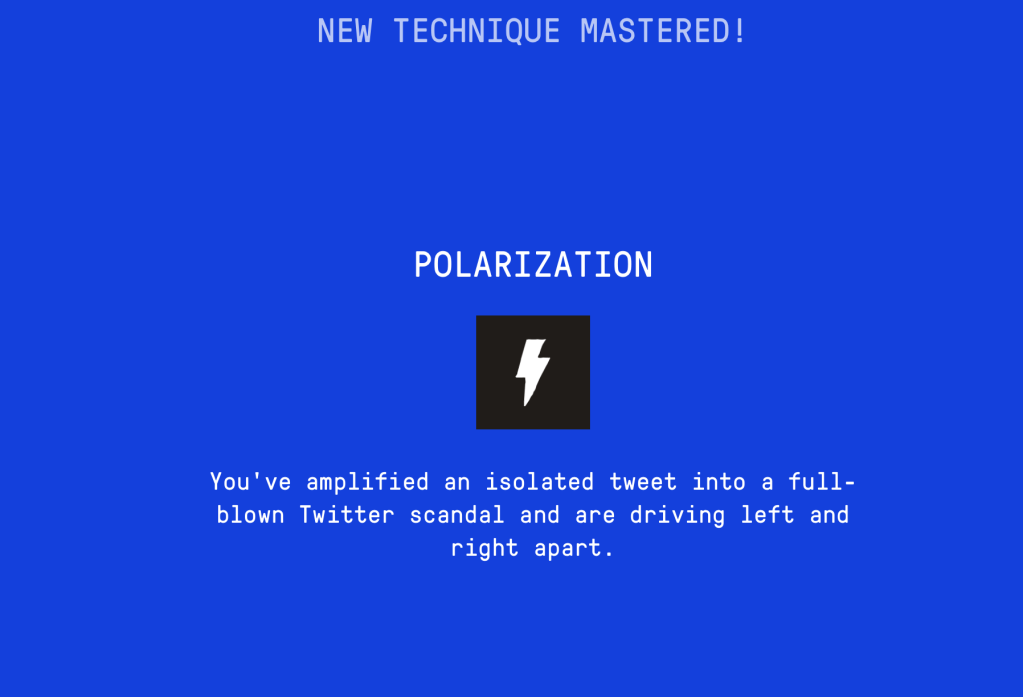
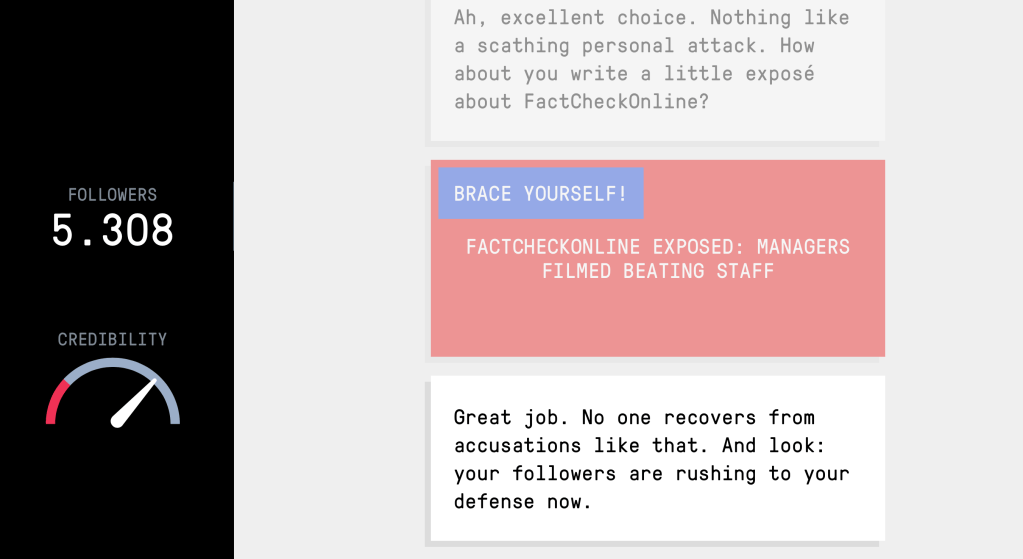
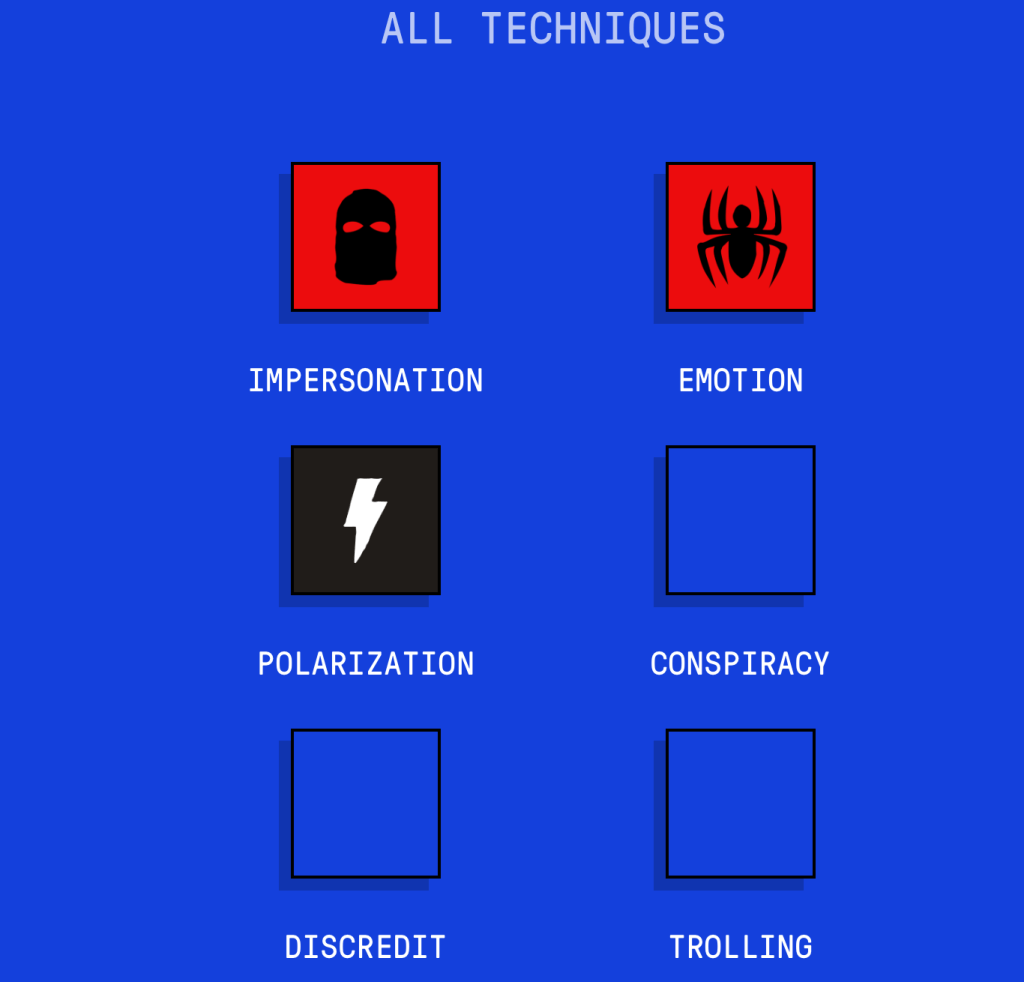
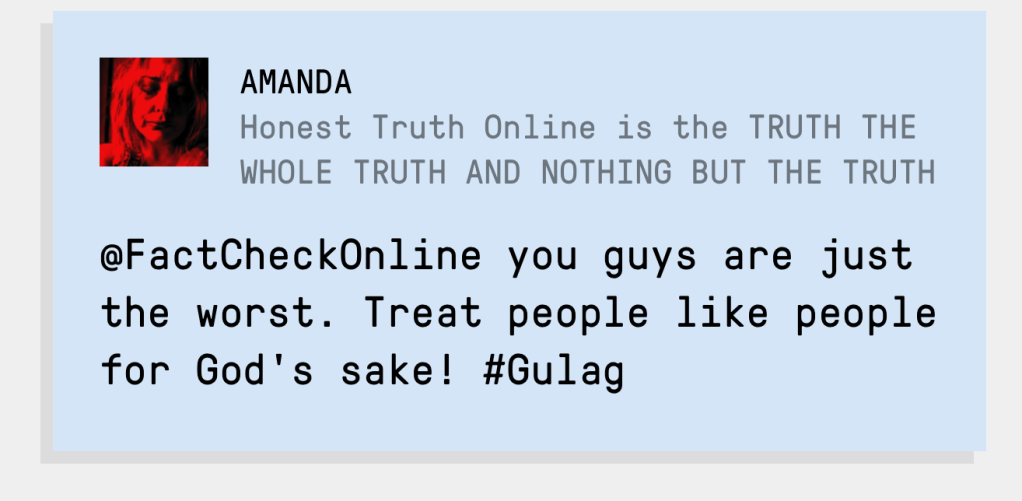
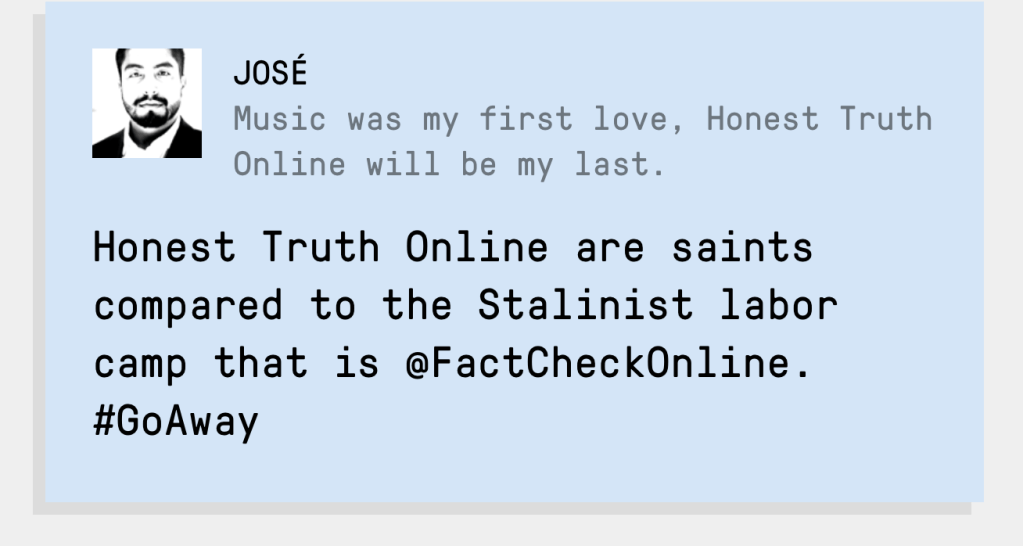
The “Bad News” game is extremely effective as it focuses more on interaction than just presenting information. This game makes you take on the role of a misinformation/disinformation content creator, and it shows you the different ways that content can be presented as well as how it can affect an audience. Posting content that provokes a certain emotion, or posting something that divides people against each other are two of several tactics used in the realm of misinformation. Being able to make choices about what types of articles you put out, whether or not you want to attack another news site or attack your audience when the credibility of your site is being challenged, helps players become familiar with these strategies in today’s media. The level of interaction within this game is entertaining, and the game itself is very impactful in terms of serving as a misinformation educational tool. An article from the European Parliament details how misinformation and disinformation encourage division amongst citizens and also manipulate individuals into believing false claims due to appealing to personal beliefs. The American Psychological Association claims that not only are individuals more likely to believe information that comes from a source they personally trust or find credible, but they will also be more inclined to believe false claims if there is an emotional aspect that distracts them. In “Bad News”, once followers had been exposed to several posts from my news site “Honest Truth Online”, they were quick to shutdown any and all outside claims that my site was providing misinformation. They had formed a connection with my site and the content I was producing without even taking the time to verify whether or not I was manipulating them. These two articles highlight the exact same tactics that were present within the game.
Additionally, a Pew Research Center report emphasized how 67% of Americans found made-up news and altered videos to be some of the most confusing versions of misinformation. This statistic is a powerful reminder of the importance of tools like “Rumor Guard” and “Bad News”. Having educational tools available to teach the public about how to identify misinformation and the impacts it has on society will ultimately help combat the heightened confusion that is associated with various forms of misinformation.
I believe there is tremendous value in educational tools and interactive games that actually show you the ways in which misinformation exists and is utilized within the media, rather than just presenting you a warning without any guidance. Experiencing games such as “Bad News” can help you recognize the tactics that are in effect to manipulate you and keep you in a cycle of accepting and sharing inaccurate information. Educational tools such as “Rumor Guard” help reiterate the significance of continuously verifying the information that you are presented with. Being skeptical until you find the evidence that supports what you’ve seen or been told is important. Tools/games like these ultimately make you aware of misinformation and encourage you to find ways to remain critical in your overall media literacy.
 3rianna’s Way
Leave a comment